Dubai Gold Souk Bargaining Guide 2026: Weights & Charges

You can overpay by hundreds of dirhams at the Dubai Gold Souk without ever being cheated on the gold rate — the money leaks out through two billing practices most first-time buyers never see coming: gross-weight billing and inflated making charges. The souk's 300+ shops along Deira's creek-side streets offer transparent prices and high purity standards, and bargaining is not just accepted, it is expected. This guide shows you exactly how both tricks work and how to beat them in 2026.
Gross Weight vs Net Weight: The Trick That Costs Buyers Most
Here is the single most important concept in this guide.
When you pick up a necklace with diamonds, enamel, or colored stones, the shop's scale shows the gross weight — the gold plus the stones, enamel, settings, and sometimes even the lac (wax) backing inside Kundan pieces. Stones are worth a fraction of gold's price, yet some shops bill the entire gross weight at the gold rate.
Net weight is the gold alone — and that is the only weight you should pay the gold rate on.
How different embellishments are treated
Not all stones are priced the same way, and knowing the difference protects your wallet:
- Cubic zirconia and synthetic stones: these cost almost nothing. Their entire weight should be deducted from the billable gold weight, with only a small setting charge (typically AED 20–80 per piece) added to making charges.
- Certified natural diamonds: never priced at gold rates. The gold is weighed separately at net weight, and diamonds are priced individually by the 4Cs (carat, cut, clarity, color) with certificates from GIA, IGI, or HRD.
- Kundan and Polki jewellery: traditional Kundan sets contain lac (wax/resin) linings behind uncut diamonds, and lac can account for 20–40% of the gross weight. Always demand a written net-gold-weight certificate before buying.
What to say at the counter
Ask this exact question before any price discussion: "What is the net gold weight, excluding stones and enamel?" If the seller hesitates or refuses to separate it, walk away. Reputable shops will weigh the piece, deduct the embellishments, and write the net weight on your invoice.
Making Charges: Where the Real Bargaining Happens
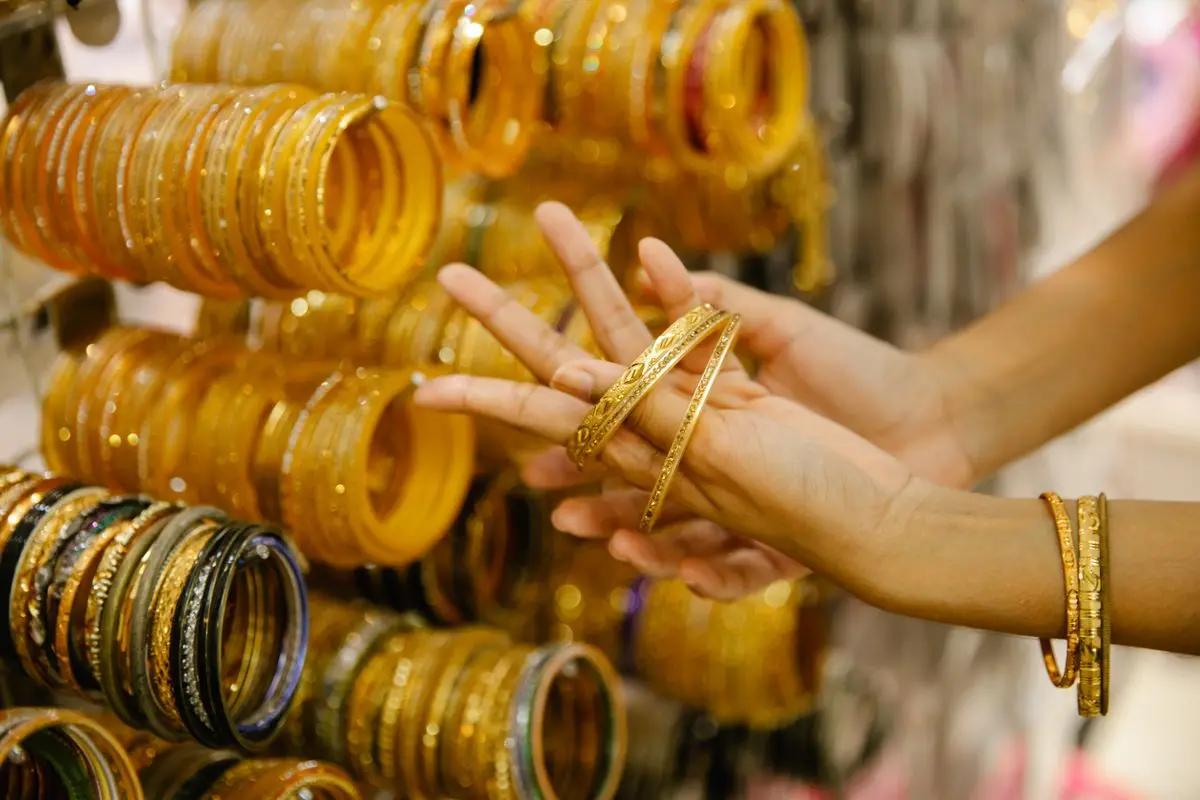
The gold rate is fixed daily and non-negotiable. Making charges — the fee for craftsmanship — are where your bargaining power lives.
Typical making-charge ranges in the Souk (2026)
- Plain 24K coins and simple bars: AED 5–15/gram
- Simple chains, plain bangles: AED 10–25/gram
- Standard necklaces and rings: AED 20–40/gram
- Intricate bridal sets, filigree: AED 40–80+/gram
- Designer and branded pieces: AED 60–150+/gram
Mall boutiques, by comparison, often charge AED 40–120+ per gram with little room to negotiate — one reason experienced buyers prefer the Souk. For the full breakdown of how charges and VAT combine, see our guide to gold making charges and VAT in the UAE.
How to bargain: a step-by-step approach
- Know the day's rate first. Check the live rate before you enter — use our gold price calculator to see what the piece should cost before charges.
- Compare at least three shops. Making charges for similar designs can differ by AED 200–1,500 on the same piece. Smaller shops often flex more than big branded outlets.
- Start at 40% below the quoted making charge. Sellers inflate the opening quote expecting exactly this. A calm counteroffer is part of the ritual, not an insult.
- Bundle purchases. Buying two or three pieces together gives you leverage for a collective discount on charges.
- Offer cash. Card payments can attract a 1–2.5% convenience fee at some shops; cash removes the fee and sometimes earns a better price.
- Be ready to walk away. The most powerful sentence in the Souk is silence followed by your feet. Sellers frequently call you back with a better price.
Realistic outcome: most buyers can negotiate 15–20% off quoted making charges, and skilled bargainers on plain pieces get up to 30–50% off. A few Arabic phrases — "ghali jiddan" (too expensive) — signal that you know the game.
VAT and Tourist Refunds: The 5% You Should Not Ignore
Since January 2018, the UAE applies 5% VAT on gold jewellery — calculated on the gold value plus making charges. On a Dh10,000 purchase, that is Dh500. It matters.
Key facts:
- Jewellery: 5% VAT applies to the full subtotal (gold + making charges).
- Investment-grade gold (24K bars and coins): may qualify for the reverse charge mechanism, effectively zero VAT for the buyer in qualifying transactions. Ask your dealer specifically and make sure the invoice reflects it.
- Tourists: the UAE operates a Tourist VAT Refund scheme. Visitors can claim back VAT paid on purchases (including gold jewellery) when leaving the country, subject to minimum purchase thresholds and the refund process at the airport. Keep your invoices — they are your refund paperwork.
The Souk vs Meena Bazaar vs Malls: Where Should You Buy?
Deira Gold Souk
Making charges AED 12–35/g (the lowest of the three); bargaining is high — up to 30–50% off charges. Best for bullion, 24K bars, and heavy bridal pieces, with an unbeatable bullion selection.
Meena Bazaar (Bur Dubai)
Making charges AED 18–45/g; bargaining moderate to high. The cultural home of Indian 22K bridal, Kundan, and temple designs; bullion selection is limited.
Mall showrooms
Making charges AED 40–120+/g; pricing fixed with minimal bargaining. Best for 18K Italian pieces, diamonds, and luxury brands; bullion is rare and carries high premiums.
The Souk wins for investment gold and maximum bargaining. Meena Bazaar — a one-dirham abra ride across the creek — is the cultural home of South Asian bridal designs. Malls win on comfort and luxury brands, at a price.
Your Pre-Purchase Checklist
- Check today's live gold rate independently
- Get the net gold weight in writing (stones/enamel deducted)
- Get making charges quoted per gram, then negotiate
- Confirm the karat (22K, 21K, 18K) — it must be on the invoice
- Check the hallmark on the piece (916 for 22K, 875 for 21K, 750 for 18K)
- Confirm how VAT is applied on your invoice
- Pay by cash where possible to avoid card surcharges
- Keep the invoice — it is your warranty, resale proof, and VAT-refund document
Want a practice run? Price your target piece with our gold price calculator and tola-gram converter before you go, so you walk in knowing exactly what a fair deal looks like.
Frequently Asked Questions
Can you bargain in the Dubai Gold Souk?
Yes — bargaining is expected, especially on making charges. The gold rate itself is fixed, but making charges are negotiable, with 15–30% reductions common for confident buyers who compare shops.
What is the difference between gross weight and net weight?
Gross weight is the total weight of the piece including stones, enamel, and settings. Net weight is the gold alone. You should only pay the gold rate on the net weight; stones and embellishments are priced separately.
How much are making charges in the Dubai Gold Souk?
Typically AED 10–50 per gram depending on design complexity — plain pieces at the low end, intricate bridal sets at the high end. These are starting quotes; negotiate before accepting.
Do tourists pay VAT on gold in Dubai?
Yes, 5% VAT applies on gold jewellery purchases, but tourists can claim refunds under the UAE's Tourist VAT Refund scheme when departing, provided they keep their invoices.
Is gold cheaper in the Souk or in malls?
The gold rate is the same everywhere; the Souk wins on making charges (often half of mall rates) and bargaining flexibility. Malls charge AED 40–120+/gram in making charges with fixed pricing.
Should I pay cash or card at the Gold Souk?
Cash is preferred — some shops add 1–2.5% card surcharges, and cash payments can unlock slightly better negotiated prices.
How do I know the gold is genuine?
Buy only hallmarked pieces (look for 916/875/750 stamps), insist on an itemized invoice showing karat, net weight, rate, and charges, and stick to established shops. For bars, buy sealed with assay certificates.
Gold rates change daily. Check live Dubai rates and price your piece with our calculators before every purchase.