Cash for Gold in Dubai: Pawn Shops, Scrap Buyers & Traps
Cash for gold Dubai deals live or die on one number you can work out yourself before you enter any shop: what your gold is worth = weight × purity × today's board buyback rate. Compute it first, and no buyer can quote you far below it. This guide explains the pricing maths, how pawn shops profit, and the traps to avoid. For the full selling process, see our deep guide to selling gold in the UAE; this page covers the pawn angle.
Cash for Gold Dubai: How Every Buyer Prices Your Gold
Every legitimate buyer uses the same maths, whether they show it or not:
Payout = (gross weight − stones and non-gold parts) × purity fraction (karat ÷ 24) × today's per-gram board rate − the buyer's margin.
You are paid only for pure gold content: a 22K piece is 22/24 (91.6%) pure, an 18K piece 75% pure. Gemstones, clasps and enamel add scale weight but no payout, so a good counter deducts them openly.
A worked example (illustrative figures)
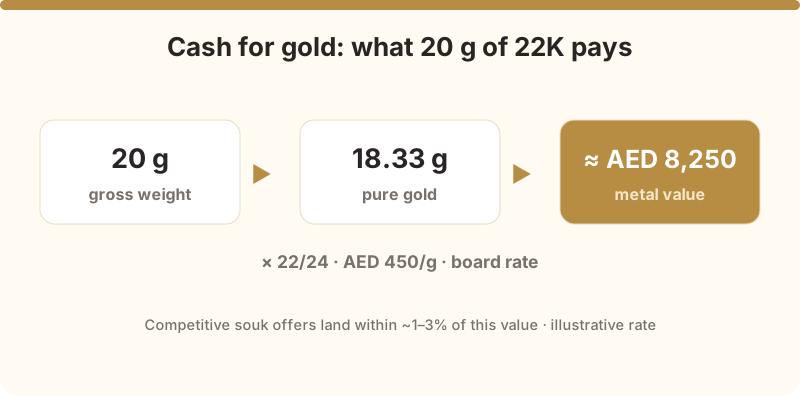
Take 20 g of 22K gold at an illustrative 24K board rate of AED 450 per gram. Pure-gold content is 20 × 22/24 = 18.33 g, so metal value is 18.33 × AED 450 ≈ AED 8,250, before the buyer's small margin. Figures are illustrative only — check today's gold rates in Dubai and run your own numbers in the sell gold estimator before you sell.
Souk dealers compete within a few streets, so buyback for hallmarked jewellery typically lands within about 1–3% of the day's board rate at a competitive counter. An offer 10–15% below your metal value is not "the market" — it is margin, and you should try the next shop. Also remember: making charges and the 5% VAT you paid are never recovered. You are selling metal, not jewellery.
How Do Pawn Shops Make Money on Gold?
A pawn shop runs two profit engines on your gold. First, loans: you pledge the gold, they lend only a fraction of its melt value, and they earn interest plus storage fees. Repay and they keep the interest; default and they resell the gold — having lent well below melt, they profit either way. Second, buying: when they buy outright, they offer well below melt because their model prices in default risk, holding costs and resale margin.
The point most sellers miss: a pawn loan is not a sale. If you still want the piece, compare the loan's total cost against a bank option. If you want it gone, a competitive souk sale almost always beats a pawn payout.
Cash for Gold — Why Does It So Often End in a Headache?
Forum complaints repeat the same traps, almost always against sellers who did not know their number first:
- "We buy at today's 24K rate" — quoted for a 22K or 18K item. The headline rate is for pure gold; you are paid on your karat fraction.
- Weighing with gemstones, then adding a "stone charge" — stones should simply be excluded from the gold weight, not counted and charged for again.
- Testing or melting out of sight, or pressure to melt before a price is agreed. Once melted, your jewellery and your bargaining power are gone.
- "Refining fees" invented at the counter — a normal margin is small and visible in the rate; a surprise fee on ordinary jewellery is an invented deduction.
- Doorstep and hotel-room buyers offering a "free evaluation" — no shop, no licence, no comeback.
- Postal mail-in envelopes — a lowball offer once they hold your gold, and a costly, slow return if you refuse.
- Pledged-gold "release services" charging a fee to free your own gold from a lender — go directly to your lender instead.
If a deal with a licensed trader goes wrong, you have rights. The UAE Government portal's consumer protection page explains complaints through the Ministry of Economy and Dubai's Department of Economy and Tourism.
How to Get a Price Based on the Board Rate
- Know your number first: weigh at home if you can, check the karat stamp (916 = 22K, 750 = 18K), check today's rate, and run the sell gold estimator.
- Get three quotes in the Deira Gold Souk, where buyers compete side by side and competition pulls offers toward the board rate.
- Insist on a written breakdown — weight, karat, rate per gram and every deduction — before you agree.
- Watch the test: XRF testing in front of you is standard at good counters; your piece should never vanish into a back room.
- Never let anyone melt or file the piece before the price is agreed.
What Are Some Tips for Selling Rare Coins or Gold Bars and Making a Profit?
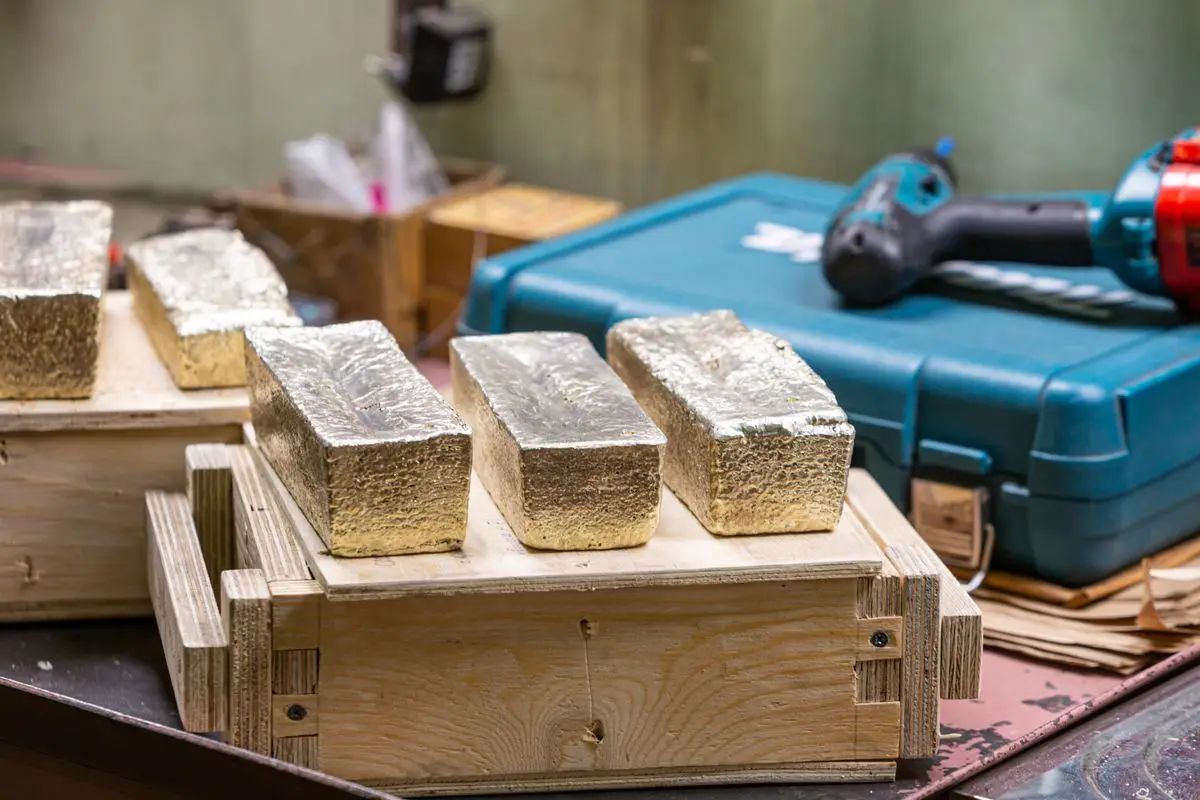
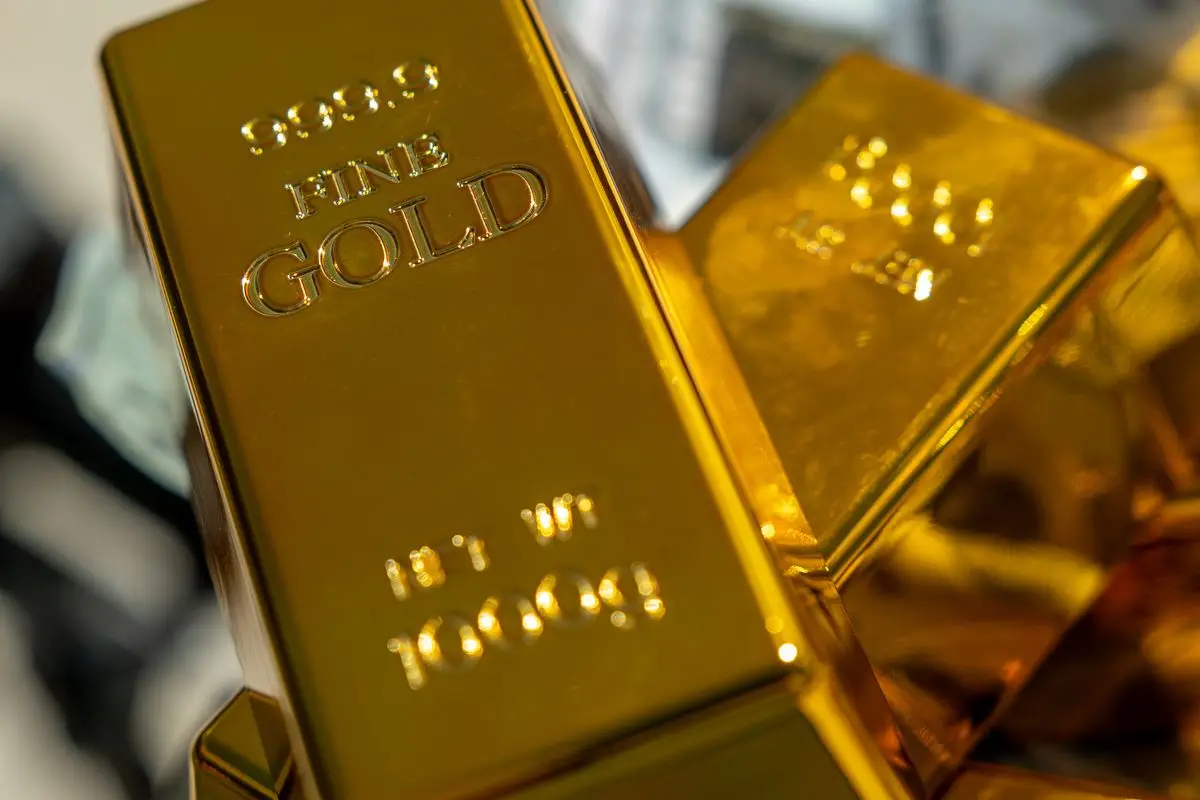
Bars and sealed, well-known coins sell closest to board value, because there is no testing debate and no stone deduction. Keep bars in assay packaging with certificates; breaking a seal can cost more than any fee. The exception is genuinely rare, numismatic coins, which can be worth far more than melt to a collector. Never sell those to a scrap buyer, who pays only for metal — get a coin dealer's appraisal first. The same applies to antique jewellery with provenance: scrap is the floor, not the ceiling.
Documents, ID and Staying Safe
Licensed UAE buyers ask for ID — Emirates ID or passport — and record the sale. That signals a legitimate counter, not a hassle, and protects you too. Your original purchase invoice speeds things up by documenting weight and purity. At reputable shops, payment is cash or bank transfer on the spot. If a buyer wants your gold now and payment later, walk out.
Frequently Asked Questions
Can I sell broken or damaged gold?
Yes. For scrap, condition barely matters: broken and perfect chains of the same weight and karat contain the same pure gold.
Can I sell gold that I bought abroad?
Yes. Dubai buyers routinely purchase gold of any origin once testing verifies its purity. A foreign invoice helps, but the counter test decides the karat used.
How fast is payment when I sell gold in Dubai?
At a reputable licensed shop, payment is immediate — cash or bank transfer on the spot, once testing is done, the breakdown is agreed and your ID is recorded. Any delay is a reason to choose another buyer.
Is it better to pawn or to sell my gold?
Pawn only if you want the piece back and the loan's total cost beats other borrowing. If you want it gone, sell: a competitive board-rate sale almost always pays more than a pawn buy price.
Do I get back the making charges and VAT I paid?
No. Making charges and the 5% VAT are never recovered on a scrap sale. You are paid for pure gold content only, minus a small margin of roughly 1–3% at a competitive counter.
Note: Rates, margins and the example here are illustrative and change daily. Check today's board rate, calculate your value before visiting any buyer, and use only licensed traders who test in front of you.